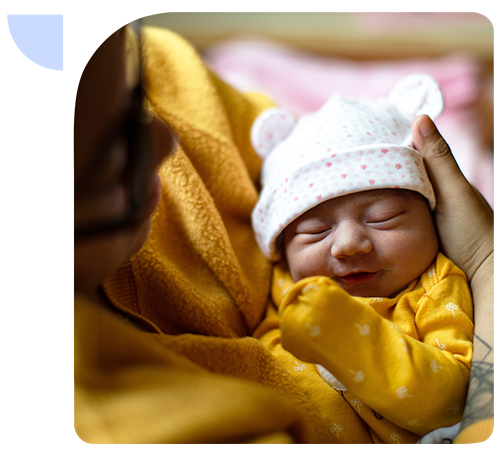
Supporting Baby's Sleep: Sleep Patterns of Infants / Apoyando el sueño del bebé: Patrones de sueño de los bebés
0-3 Months
Newborns spend about 14 to 17 hours sleeping each day. At this age, sleep is for shorter periods as they need to eat more frequently.
3-6 Months
At this age, the amount of time babies sleep drops to around 12 to 15 hours a day. They usually sleep for longer periods as they can go longer without eating.
6-12 Months
Starting at around 6 months of age, babies sleep for about 11 to 14 hours a day, mostly at night, though they may wake up throughout the night.
Sleep is essential for your baby’s development, but adjusting to their sleep schedule in the first year can be challenging. It’s okay if they don’t follow a set pattern right away. Here are some tips to help establish more consistent sleep habits, especially as they approach 12 months.
Create a Comfortable Sleeping Environment
If possible, keep lights dim, noise levels low, and temperatures cool. It is important for your baby to know that it's time for sleep, not play.
Keep Things in Perspective
Understanding your baby's unique habits can take time. It can be easy to feel overwhelmed. If you have questions or concerns, talk to your child's health care provider.
Have a Calming Bedtime Routine
To prevent overstimulation before bedtime, try bathing, reading, singing, or cuddling before putting your baby to bed every night.
Encourage Them to Fall Asleep on Their Own
Try to put your baby to bed sleepy, but awake. This will help them learn that the bed is a safe place to fall asleep.
Practice Safe Sleep
-
The American Academy of Pediatrics recommends that infants sleep in the same bedroom as their parents for at least the first six months of life.
-
Infants should sleep on a separate surface, such as a crib or a bassinet, and never on a couch, armchair, or soft surface.
-
Avoid sleeping in an infant seat or car carrier (except when riding in the car).
-
Place the baby on their back.
-
Avoid using soft bedding, including crib bumpers, blankets, pillows, and soft toys. The crib should be bare.
Apoyando el sueño del bebé: Patrones de sueño de los bebés
0-3 meses
Los recién nacidos pasan entre 14 y 17 horas durmiendo cada día. A esta edad, el sueño ocurre en períodos más cortos porque necesitan alimentarse con más frecuencia.
3-6 meses
A esta edad, la cantidad de horas de sueño baja a alrededor de 12 a 15 horas al día. Generalmente duermen por períodos más largos ya que pueden pasar más tiempo sin comer.
6-12 meses
A partir de los 6 meses, los bebés duermen aproximadamente de 11 a 14 horas al día, principalmente por la noche, aunque pueden despertarse en distintos momentos.
El sueño es esencial para el desarrollo de su bebé, pero adaptarse a un horario de sueño en el primer año puede ser un reto. Está bien si no siguen un patrón fijo de inmediato. Aquí hay algunos consejos para ayudar a establecer hábitos de sueño más consistentes, especialmente cuando se acercan a los 12 meses.
Cree un ambiente cómodo para dormir.
Si es posible, mantenga las luces tenues, el ruido bajo y la temperatura fresca. Es importante que su bebé entienda que es hora de dormir, no de jugar.
Mantenga las cosas en perspectiva.
Comprender los hábitos únicos de su bebé puede tomar tiempo. Puede ser fácil sentirse abrumado. Si tiene preguntas o inquietudes, hable con el proveedor de salud de su hijo.
Tenga una rutina relajante antes de dormir. Para evitar la sobreestimulación antes de la hora de acostarse, bañe, lea, cante o acurruque a su bebé antes de ponerlo a dormir cada noche.
Anímelos a dormirse por sí solos.
Trate de acostar a su bebé somnoliento, pero despierto. Esto les ayudará a aprender que la cama es un lugar seguro para quedarse dormidos.
Practique un sueño seguro.
-
La Academia Americana de Pediatría recomienda que los bebés duerman en la misma habitación que sus padres durante al menos los primeros seis meses de vida.
-
Los bebés deben dormir en una superficie separada, como una cuna o un moisés, y nunca en un sofá, sillón o superficie blanda.
-
Evite que el bebé duerma en un asiento infantil o en un portabebés para automóvil (excepto cuando viajen en el auto).
-
Acueste siempre al bebé boca arriba.
-
Evite usar ropa de cama blanda, incluyendo protectores de cuna, mantas, almohadas y peluches. La cuna debe estar vacía.
Sources / Fuentes: La Clinica and ACES Aware
Center for Youth Wellness and ZERO TO THREE – Good Sleep Habits. (2019).
ACEs Aware. https://www.acesaware.org/wp-content/uploads/2019/12/5-Good-Sleep-Habits-English.pdf
Rachel Y. Moon, Rebecca F. Carlin, Ivan Hand, THE TASK FORCE ON SUDDEN INFANT DEATH SYNDROME AND THE COMMITTEE ON FETUS AND NEWBORN; Sleep-Related Infant Deaths: Updated 2022 Recommendations for Reducing Infant Deaths in the Sleep Environment. Pediatrics July 2022; 150 (1): e2022057990. 10.1542/peds.2022-057990